Communicate with Confidence
Build stronger teams, reduce misunderstandings, and improve workplace relationships.
⏱ 15 Minutes 💬 Workplace Skills ✅ Quick Knowledge Check
The Skill That Connects Us All
Every conversation matters.
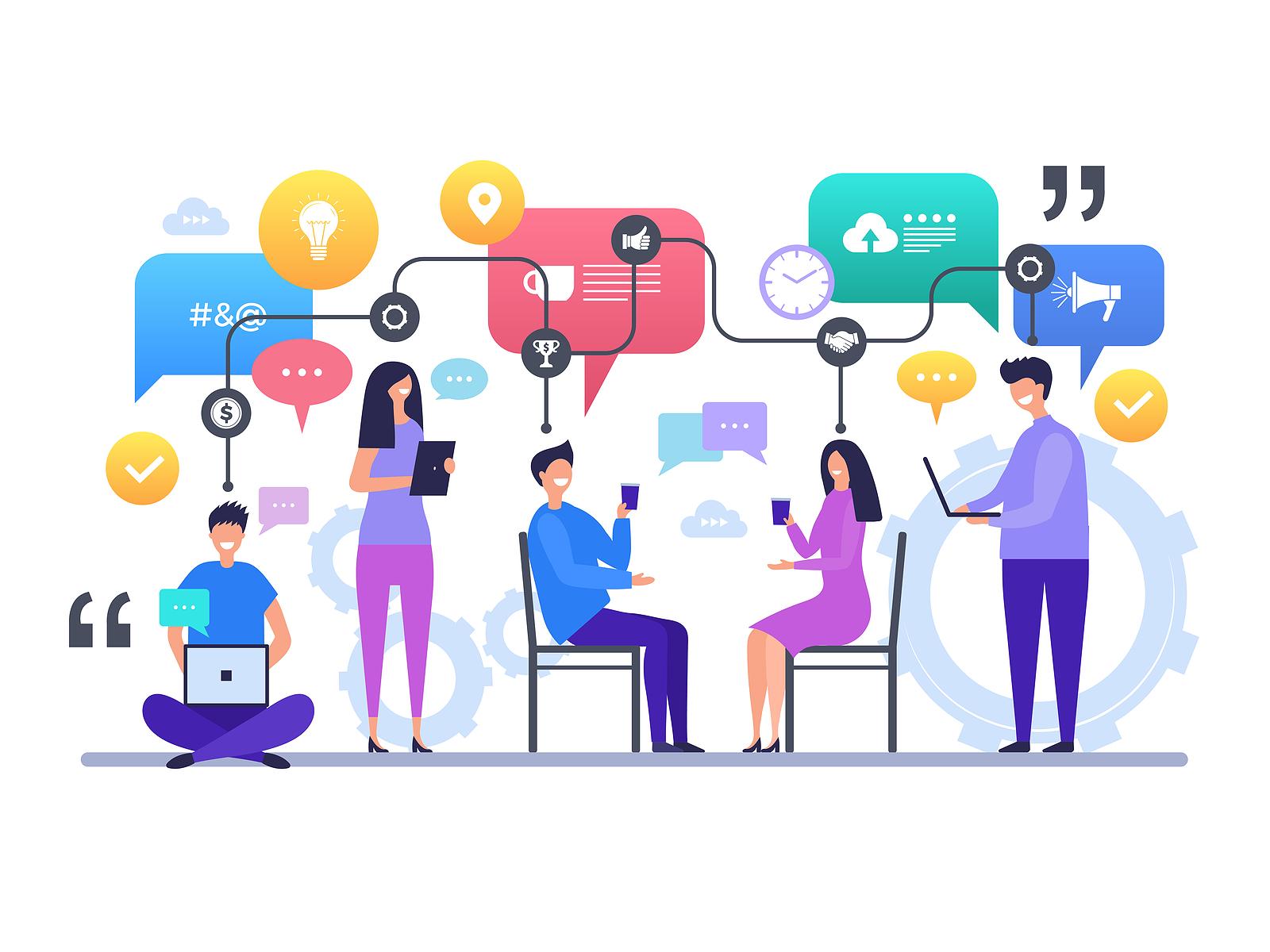
Whether you're talking with a resident, updating a coworker, writing a shift note, or sending an email, clear communication helps prevent mistakes, build trust, and improve teamwork.
Why Communication Matters
Builds Trust
Clear, honest communication strengthens relationships with residents, families, & coworkers.
Prevents Mistakes
Sharing accurate information helps reduce errors and keeps everyone informed and safe.
Improves Teamwork
Listening, asking questions, and sharing updates help your team work together more effectively.
Better Resident Care
When communication is clear and consistent, residents receive safer, higher-quality care.
Ultimately, communication isn't just about getting a message across. It's about creating understanding, building connection, and helping people feel confident that they are heard and cared for.
Want to Have Better Conversations?
Great communication can change the way people experience a conversation. It’s not just about what you say. It’s about listening with intention, understanding what the other person needs, and responding in a way that builds trust and connection.
Ready to strengthen your conversations?
Better Conversations offers practical tools and strategies to help you become a more thoughtful, confident communicator. Learn how to listen more effectively, build stronger connections, navigate challenging conversations, and communicate with greater clarity and confidence.
Currently available to NHAs, DONs, HR/Payroll, Administrators in Training, Assistant Administrators, ADONs and specifically trained individuals.
How Effective Is Your Communication
Quick Self-Check
□ Do I listen without interrupting?
□ Do I confirm important information?
□ Do I ask questions when something isn't clear?
□ Do others understand my message the first time?
□ Do I adapt how I communicate with residents and coworkers?
If you answered "Not always" to any of these, you're in the right place. This lesson will help you strengthen those skills.
The Power of Listening: More Than Just Hearing
Listening is one of the most powerful tools in communication and one of the most overlooked. In a fast-paced environment like a nursing home, it’s easy to focus on what we need to say. But true communication starts with listening.

Why Listening Matters
Builds Trust – When people feel heard, they feel valued and respected. This strengthens trust between coworkers, residents, and families.
Prevents Mistakes – Listening carefully helps you catch important details, especially in resident care, instructions, and safety concerns.
Reduces Conflict – Many disagreements come from misunderstandings that could be avoided by listening fully before responding.
Improves Relationships – Whether with coworkers, residents, or family, listening shows respect, empathy, and genuine care.
Enhances Teamwork – Good listening helps teams work more smoothly by ensuring everyone understands goals, roles, and expectations.
Supports Better Decision-Making – When you listen to different perspectives, you gain clearer insight and can make more informed, thoughtful choices.
Increases Resident Satisfaction – Residents feel more comfortable, safe, and respected when staff truly listen to their needs and concerns.
Boosts Morale and Engagement – People are more motivated and engaged when they know their voices matter.
Encourages Openness – When others feel listened to, they are more likely to share important information, concerns, or ideas in the future.
Demonstrates Professionalism – Active listening reflects patience, compassion, and a commitment to high-quality care and service.

Become a Better Listener
While most people believe they’re good listeners, many common habits actually get in the way of true understanding. Here are a few misconceptions about listening that can lead to poor communication:
Listening is NOT.....
Waiting for your turn to talk
Focus on understanding the other person instead of planning your response.
Immediately fixing the problem
Sometimes people need to feel heard before they need a solution.
Agreeing with everything you hear
You can listen with empathy and respect without agreeing with someone’s perspective.
Multitasking
Looking at your phone, completing another task, or thinking about what comes next can make people feel unheard.
Try This Today: The next time someone is talking with you, give them your full attention for three uninterrupted minutes.
Put distractions aside.
Listen without interrupting.
Ask one thoughtful follow-up question.
Then reflect back what you heard.
Try saying: “What I’m hearing is…”
This simple habit can help you slow down, understand the other person’s perspective, and create stronger connections.
Remember: You don't have to have the perfect response. Sometimes the most powerful thing you can do is truly listen.
Building Stronger Teams. One Conversation at a Time.
Communication Across Generations
In a multigenerational workplace like a Long Term care, understanding how different age groups prefer to communicate can make teamwork smoother and more respectful. Each generation brings its own habits, shaped by the technology and culture they grew up with.
Baby Boomers (born 1946–1964)
Tend to prefer face-to-face or phone conversations. They value professionalism, formality, and respectful tone. You’ll often find they appreciate being asked for their input and experience, and may be less comfortable with texting or digital tools.
Generation X (born 1965–1980)
Known for being direct and efficient. They’re comfortable with both in-person and written communication and often prefer to get straight to the point. They value independence and may not need constant feedback, but they do appreciate clarity and follow-through.
Millennials (born 1981–1996)
Grew up with email, texting, and social media, so they’re comfortable with digital communication. They tend to value collaboration, open feedback, and authenticity. While their tone may be more casual, they still appreciate professionalism and quick, clear responses.
Generation Z (born 1997–2012)
Digital natives who often prefer short, visual, and interactive communication- texts, emojis, or videos. They value inclusivity, transparency, and real-time feedback. While they’re highly tech-savvy, they may need support developing professional tone and in-person communication skills in the workplace.
Written Communication: Say It Clearly, Even on Paper
Written communication is just as important as what you say out loud, especially in a busy workplace where messages are passed between shifts, departments, and roles. Whether you're writing an email, sending a text, or leaving a note, your words should be clear, respectful, and easy to understand.
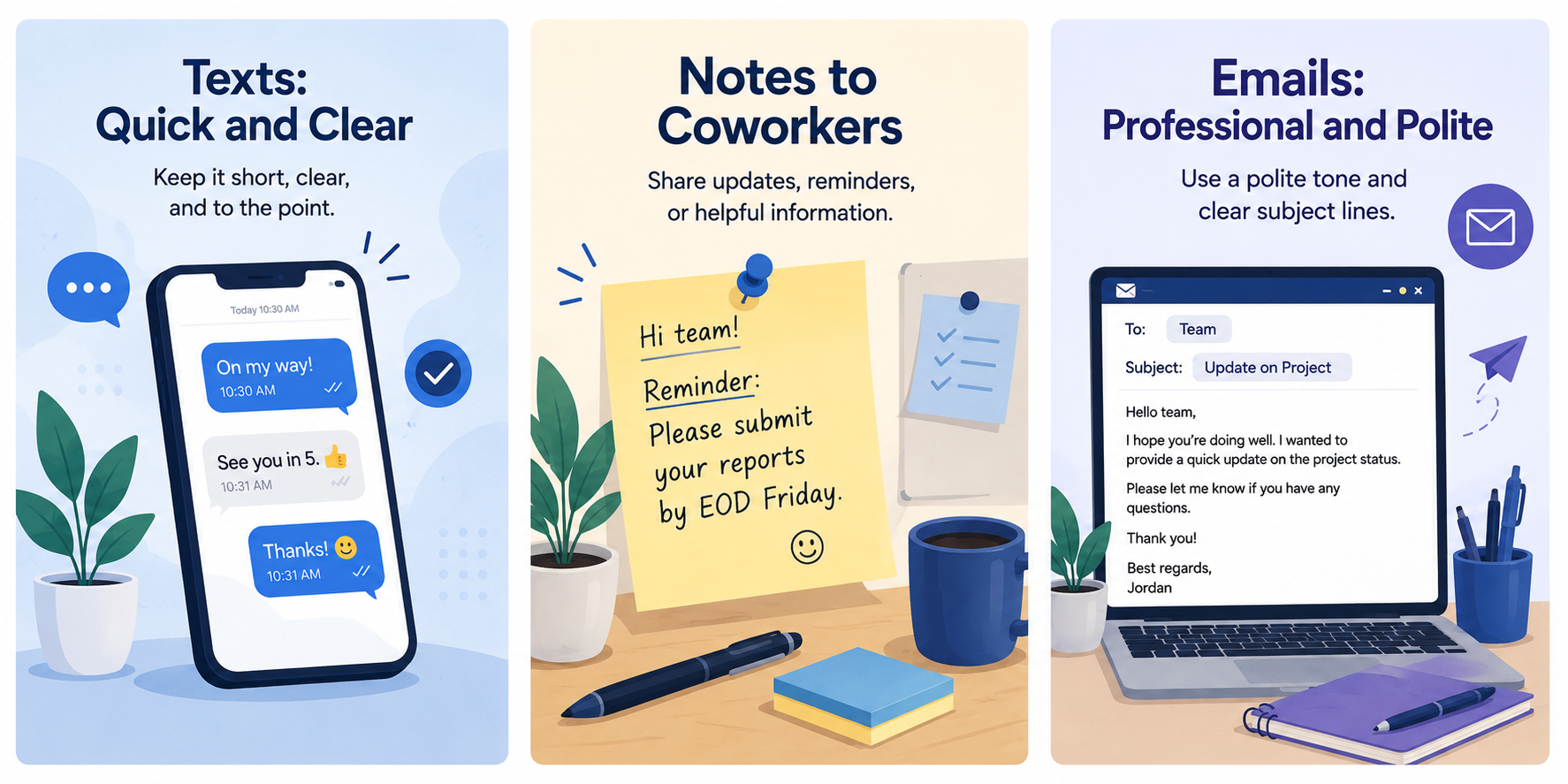
Texts are great for quick updates or urgent needs but they should still be professional.
Tips:
-
-
Use full words (avoid slang or abbreviations)
-
Be polite and to the point
-
Avoid sensitive or private information
-
Example:
Hi Stephanie- just a heads up the back door isn't working so employees are entering through the front door. ALTA was called and they are sending out a tech around 3pm today. Please let me know once they arrive, thanks!
Sometimes you’ll need to leave a written note- on a clipboard, whiteboard, shift report or a message under someone's door
Tips:
-
- Write legibly
- Include the date and time
- Be specific about what happened or what’s needed
Example:
6/6 – 2:15 PM
I put in for PTO on 2/2 for 6/9-6/13 and I see I am scheduled to work on 6/10. My PTO was approved on 2/7. Please give me a call so we can discuss.
Jenna, LPN 676-767-6767
Use email for formal communication, like updates to supervisors, HR, or department heads.
Tips:
-
- Use a clear subject line: “Resident Room 204 – Maintenance Request”
- Start with a greeting: “Hi Maria,” or “Good morning, team,”
- Be brief but complete: Include who, what, when, and why
- End with a thank you or next step: “Please let me know if you need more info.”
Example:
Subject: Request for Additional Supplies – Skilled Unit
Hi James,
We’re running low on gloves and disinfectant wipes on the skilled unit. Could we please request a restock by tomorrow morning?
Thanks so much,
- Carla, ADON
What to Avoid in Written Communication
Written communication is permanent- it can be saved, shared, and misunderstood if not done carefully. Here are some common pitfalls to avoid:
-
-
-
-
Writing in all caps FEELS LIKE SHOUTING.
-
Using sarcasm or jokes that could be misunderstood
-
Leaving out important details: "
-
Being vague: “He’s not doing well” → “Mr. Lee had low appetite and skipped lunch.”
-
Overusing abbreviations or slang, not everyone speaks fluent “text message.” “FYI, IDK if CNA 2 LMK re: meds- BRB,” Wondering what that says? So are we. While it might make sense in your head, messages like this can confuse people.
-
-
-
Discover Your Communication Style
What's Your Communication Style
Understanding your own communication style, and those of your teammates, can help build strengthen collaboration and boost overall togetherness. Take on this 3 or less minute challenge with your team: Complete this quiz that is designed to reveal which communication styles work best for both your personal and professional life.
Build Your Communication Skills in the Age of AI
In today’s AI‑driven workplace, strong communication skills matter more than ever. This learning path helps learners confidently bring generative AI into everyday communication by strengthening interpersonal interactions, encouraging mindful dialogue, improving business presentations, and enhancing professional writing. By completing these courses, participants gain the skills they need to communicate clearly, effectively, and with confidence in an AI‑enhanced environment.
Super communicators understand that whenever we speak, we’re actually participating in one of three conversations:
practical (What’s this really about?),
emotional (How do we feel?), and
social (Who are we?).
To learn more, be sure to check out this video